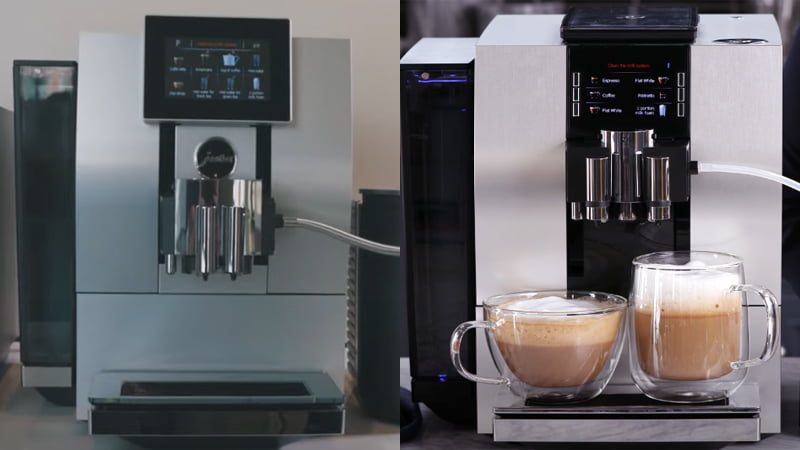
In the realm of automatic espresso machines, Jura is hailed as among the best brands, and the Jura Z8 vs Z6 are among their top-notch models. These luxurious leviathans pleasantly surprised me with their array of sophisticated features, but their hefty price tag might prove a challenging hurdle for many to overcome.
They are quite similar in appearance, except that the Jura Z8 is equipped with a touch screen while the Jura Z6 has a TFT display. The former boasts a double boiler system for faster brewing of milk-based beverages, while what the latter has in its favor is its lighter weight (but it is still on the heavy side).
Jura Z8 vs Z6: Comparison Chart


Last update on 2025-06-24 / Affiliate links / Images from Amazon Product Advertising API
Jura Z8 Vs Z6: Differences
No one wins here, and the only question is, “Which one is more suitable for you?” Keep reading to see more!
Coffee Flavour
Winner: Jura Z8
Built-in Grinder
Both the Jura Z8 vs Z6 come equipped with the exceptional “Aroma G3” grinder, a marked improvement over its predecessor, the Aroma G2. This newer version not only operates more quietly and swiftly, but it also delivers more evenly ground coffee and reportedly enhances the aroma by an impressive 12.2%.
The stainless steel grinder is super sharp, but it is prone to heat up the beans or even burn them as it operates, which can alter the espresso flavor. To deal with this, many models are equipped with ceramic grinders that maintain a consistently cool temperature.
Regarding grind settings, the more options, the merrier. Both have six settings, which will be a bit inconvenient for families with multiple coffee lovers. Considering their price bracket, they should obviously offer more grind sizes. Don’t believe this? Look for some cheaper models, such as the Gaggia Babila with 15 grind settings or the Breville Barista Touch with up to 30 settings.
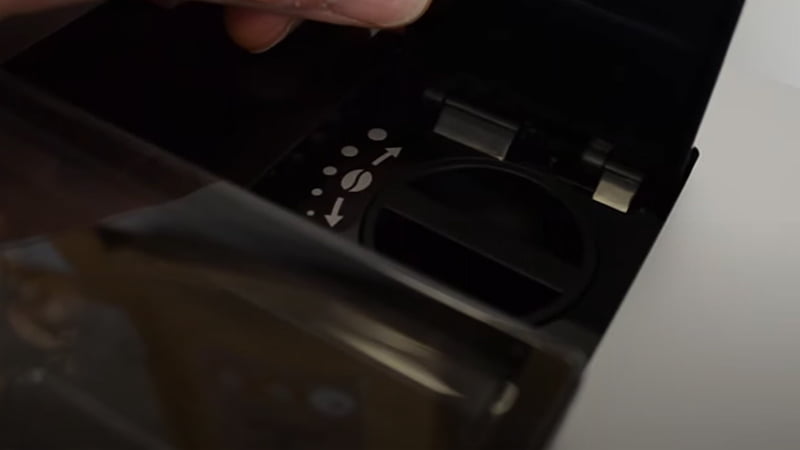
I was also glad that it was a breeze to change the grind settings on these models. All you have to do is turn a dial on top of the machine instead of using a grind wrench as you would with others. As a golden rule, it’s essential to change the grind size only when the grinder is working—doing otherwise might be a fast track to acquiring a new machine.
Heating System
The Jura Z8 is a dual-boiler espresso machine, whereas the Z6 only has one boiler. So what the former has over its competitor is the ability to brew and steam at the same time – while one boiler heats the water for brewing espresso, the other boiler heats the water for steaming milk. Both boilers work simultaneously, so there is no idle time between brewing and steaming sessions.
But the Jura Z6 won’t make you wait till you are blue in the face to get your favorite caffeinated drink. Like the Jura Z8, this one is equipped with Thermoblock technology, which heats and adjusts temperature quickly. Specifically, it takes about 20 seconds to swiftly move from one process to another by heating only a sufficient amount of water.
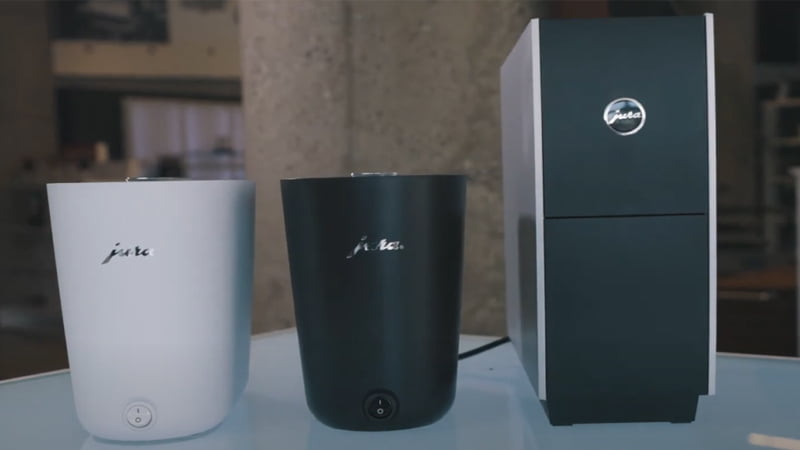
So, the absence of a double boiler system in the Jura Z8 is definitely not a big con, especially considering it is designed with home use in mind. You may consider purchasing a cup warmer separately to avoid heat loss while the machine heats up for milk steam.
Brewing System
Both the Jura Z8 vs Z6 share the Intelligent Pre-Brew Aroma System (or I.P.B.A.S.) and Pulse Extraction Process (P.E.P.). All right, I get it – they are confusing scientific terms. But you don’t need to turn to a dictionary or call for a translator—I’m here to simplify and elucidate them for you.
Many automatic espresso machines, including Jura’s, use a pre-infusion process that Jura calls the Intelligent Pre-Brew Aroma System. This pre-infusion stage is a key component in optimizing the flavor extraction from the coffee grounds and can greatly enhance the final result.
This pre-infusion step aims to ensure the coffee grounds are fully saturated and prepared for the high-pressure extraction, allowing for a more even and thorough extraction of flavors. Many of the models I’ve tested even allow the interval of this process to be toggled on/off or adjusted, but it is an unchanged default on both the Jura Z8 vs Z6.
Then, their one-of-a-kind extraction takes place at a pressure of 15 bars. But hold on, what is a “bar?” Unlike drip coffee makers, super-automatic machines force hot water through the coffee grounds under high pressure, typically between 9 and 15 bars.
I call their extraction process “one of a kind” since it forces hot water through the grounds in short bursts instead of maintaining a steady flow and pressure. This is Jura’s patented Pulse Extraction Process (P.E.P.), which results in an espresso with as much of the aroma from the beans as possible.
Milk Frothing System
Instead of coming with a manual frothing wand, the Jura Z8 vs Z6 features an HP3 auto-frothing system that is external to the machine. Right off the bat, this advanced system has a surprising amount of control and enables a beginner to froth milk with zero knowledge and skill.
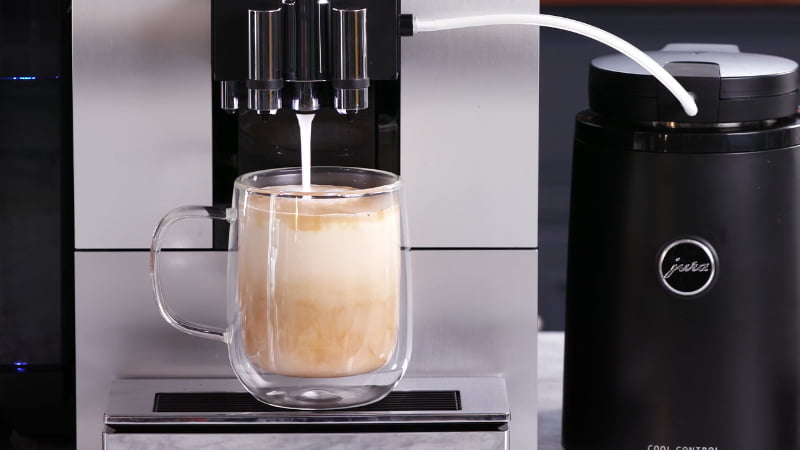
All you need to do is select your favorite milky drink and make necessary adjustments, such as the volume of milk and milk foam (quantified in secs), their temperature (10 levels), or the interval (0–60 secs) for a latte macchiato that allows the milk froth to settle and form a visually captivating, multi-layered drink. The only thing that can’t be tweaked is the foam’s consistency, but I found these espresso machines produced a fine and homogeneous frothed milk that was equally great for both cappuccinos and lattes.
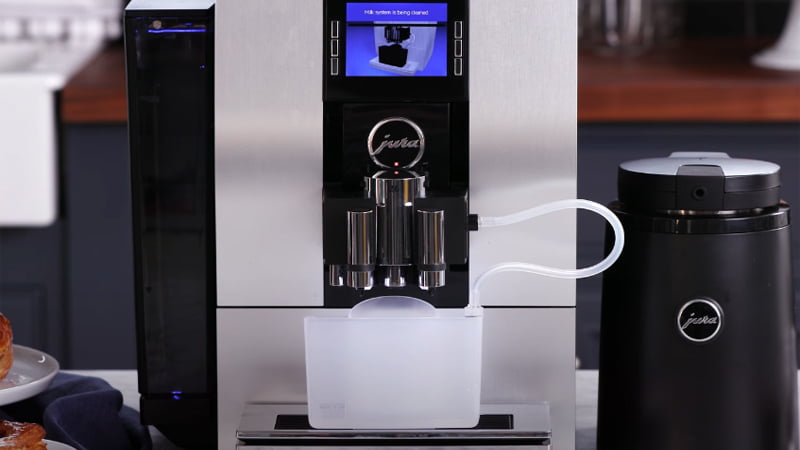
Nevertheless, there were certain elements of their milk-frothing system that left me underwhelmed or even disenchanted. Firstly, it includes a tube/hose to connect a milk jug and the milk frother, which adds unnecessary complexity to the process. In comparison, some models, like the Gaggia Babila or the Philips 3200, simplify the design by incorporating a milk container that’s discreetly nestled in the front. It also needs regular deep cleaning to remove potential mold/microbes and should be replaced every few months, depending on how often you use the machine.
For another, these dudes cost an arm and a leg, but Jura, where is my milk carafe? Instead of providing all the necessary accessories, this Swiss brand opts to sell the milk container separately, and from my perspective, this is a letdown. So I’ll let you decide if you’ll use one of yours or splurge on their milk glass or cool control unit.
Design & Usability
Winner: Jura Z6
Dimensions, Footprint, & Weight
| Jura Z8 | Jura Z6 | |
|---|---|---|
| Dimensions | 12.6 x 15 x 17.7 inches | 12.6 x 14.8 x 17.7 inches |
| Weight | 29.5 lbs | 26 lbs |
Both the Jura Z8 vs Z6 are box-like espresso machines with the sleek, sophisticated look that Jura is known for. They are nearly identical in appearance, except that the Z8 is equipped with a 4.3-inch Touchscreen Color Display, whereas the Z6 features a 3.5-inch TFT display. While I do like the modern touch the touchscreen brings, its hypersensitivity and tendency to collect fingerprints are off-putting.
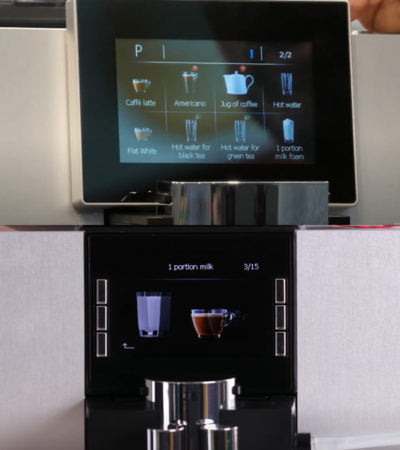
These feature-rich machines are constructed largely from ABS plastic, fortified by sturdy aluminum front and top panels, and accented with some metal elements. Aluminum may not rival the durability of stainless steel, but it does contribute to a lighter weight and a more cost-effective machine. They’re not necessarily lightweight, though, and you might work up a bit of a sweat while putting them in place unless you happen to possess the superhuman strength of the Hulk or the Mighty Thor, Marvel’s characters that I’m a big fan of.
These commercial-grade appliances are sizeable. So, if you have a smaller kitchen with limited workspace on the countertops and a narrow gap between countertops and cabinets, allocating a suitable home for them might be quite a daunting task.
Pre-programmed Coffee Options
| Jura Z8 | Jura Z6 |
|---|---|
| Ristretto Espresso Coffee Cappuccino Caffè latte Caffè Barista Lungo Barista Macchiato Latte macchiato Flat white Portion of milk foam Portion of milk Pot of coffee Hot water Hot water for green tea Hot water for black tea 2 x Ristretto 2 x Espresso 2 x Coffee 2 x Caffè Barista 2 x Lungo Barista | Ristretto Espresso Coffee Cappuccino Caffè latte Caffè Barista Lungo Barista Espresso doppio Macchiato Latte macchiato Flat white Portion of milk foam Portion of milk Pot of coffee Hot water Hot water for green tea Hot water for black tea 2 x Ristretto 2 x Espresso 2 x Coffee 2 x Caffè Barista 2 x Lungo Barista |
These boys bring a wide range of one-touch drinks to the table to satisfy the different interests of a large group of coffee aficionados. Whether you’re a purist who revels in the raw flavor of coffee or a fan of rich, creamy milk froth, you can get your coffee fix at the touch of a button.
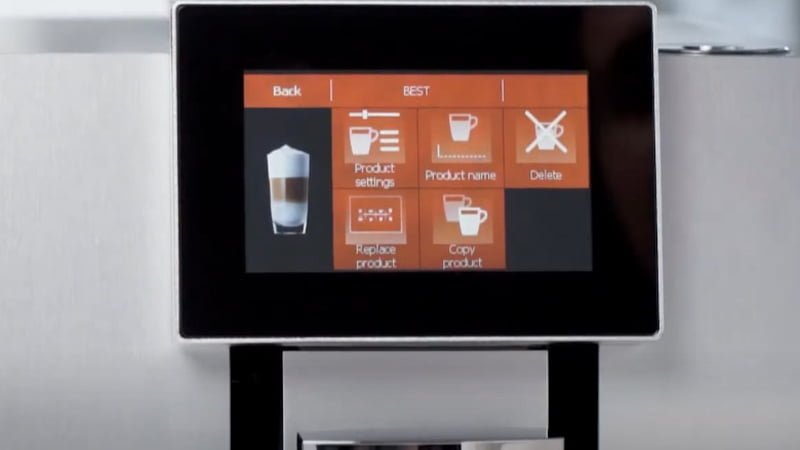
In addition to those pre-programmed drink options, you can get creative with some settings as well. Both offer 10 levels of coffee strength, three levels of brew temperature, and the ability to fine-tune the amount of coffee/milk/milk foam. They don’t have a user profile feature, but they can help you personalize your hard-to-make recipes and prevent others from changing them by allowing for doubling a drink option and giving it a name.
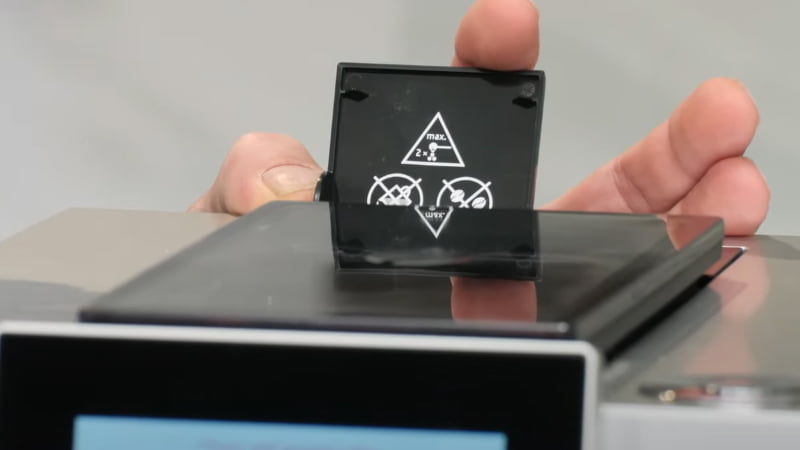
They also come with a two-scoop bypass dose chute, which allows pre-ground coffee to be used without removing all the beans from the hopper. It’s your best friend whenever you run out of whole beans or your sudden guest is a caffeine-intolerant guy.
Spout & Cup Clearance
| Jura Z8 | Jura Z6 | |
|---|---|---|
| Spout | Dual | Dual |
| Cup Clearance | 3.2-6.0 inches | 3.2-6.0 inches |
Their butterfly coffee spout can be moved very low to preserve the lovely crema layer on top of your espresso or go up to 6 inches to accommodate some mammoth-sized mugs and cups. You can even adjust the amount of separation between spigots to fit wide-mouthed cups.
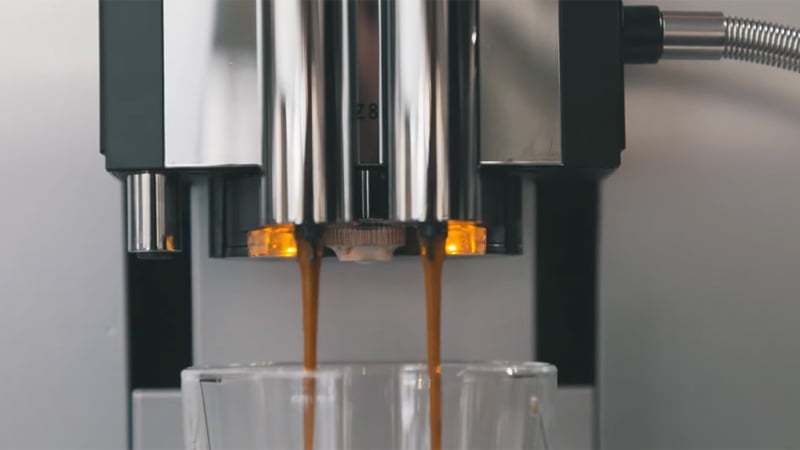
Having two coffee spigots means they can brew two cups of espresso at the same time – There’s nothing better than having you and your loved one/spouse enjoy your favorite caffeinated beverage all at once instead of exchanging angry words for the right to brew first.
Water Reservoir & Bean Hopper
| Jura Z8 | Jura Z6 | |
|---|---|---|
| Water Reservoir | 2.4 liter | 2.4 liter |
| Bean Hopper | 0.29 liter | 0.29 liter |
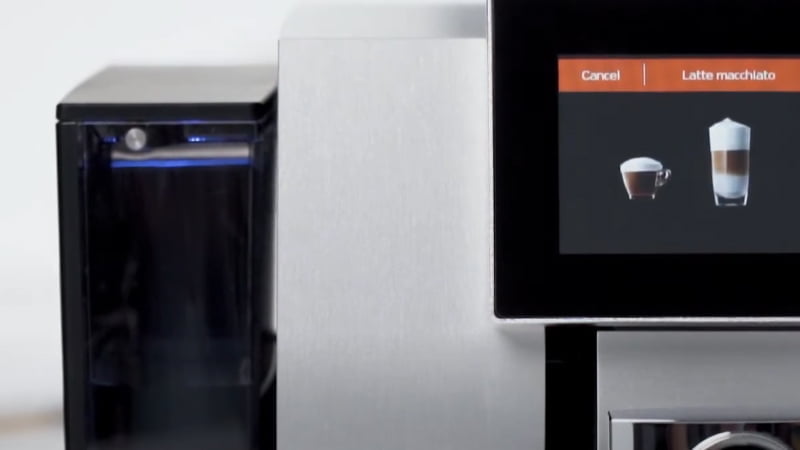
Their transparent water containers are large enough to serve a large family or an office setting without needing to be refilled too often throughout the day. You can easily grasp the current level of water thanks to the tank illumination feature, which can be set to remain on or to light up only when a beverage is being brewed.
Both come out of the box with a Clearly Smart + cartridge filter, and it’s up to you whether or not to use it. And unless you’re drawing from a source of distilled or pre-filtered water, I recommend having it installed inside the water reservoir to remove impurities from the inlet water – the key to having a perfect espresso as well as lessening the need for descaling the machine.
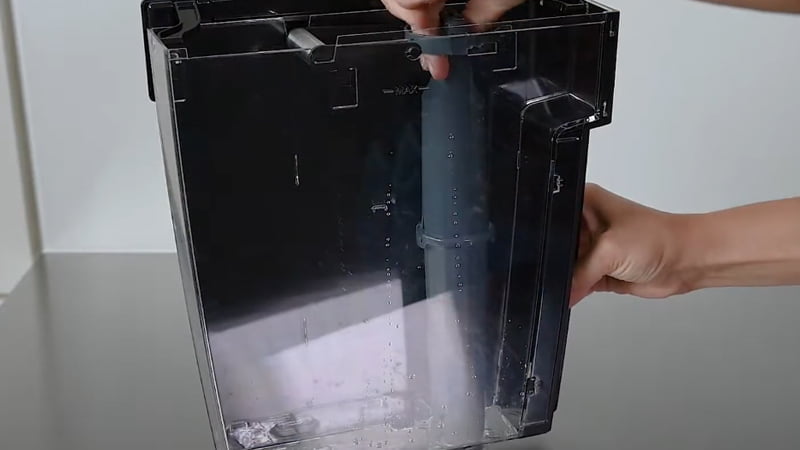
Leveraging Jura’s Intelligent Water System (IWS), which uses RFID technology, these machines can keep track of your water supply and alert you when the filter needs replacement or if there are any issues regarding water quality. In addition, when a new filter is added, the machine can automatically detect it and update accordingly. In addition, when a new filter is added, the machine can automatically detect it and update accordingly.
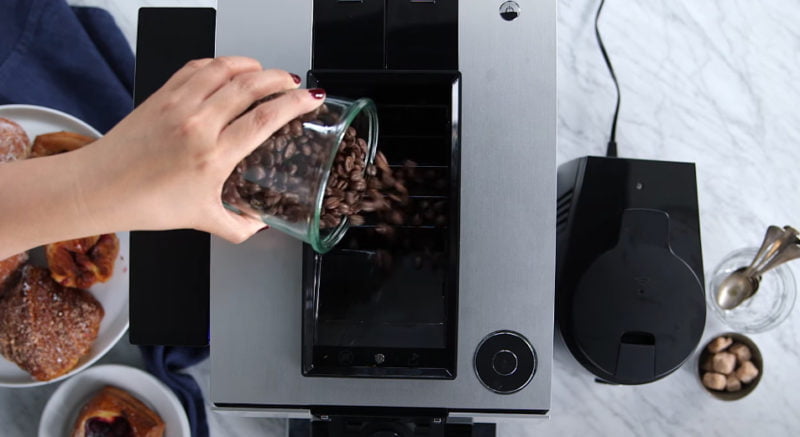
Their 0.29-liter bean compartment can house up to 280 g of whole beans. They also share a built-in Active Bean Monitoring technology that prompts you before the hopper completely runs out of beans for seamless brewing. It’s not mandatory to use all the coffee beans in one day because both models come equipped with an airtight cap that prevents air from entering the coffee bean hopper and coming into contact with the beans. This helps maintain the beans’ original flavor and aroma for a superior espresso.
Cleaning & Maintenance
Winner: Tie
When it comes to cleaning or maintaining an espresso machine, many people immediately think of arduous and time-consuming tasks. Just keep your worries at bay since they have automatic rinsing, cleaning, and descaling programs.
You don’t even need to set up phone reminders or mark the dates on the calendar since they will alert you whenever it’s the right time for descaling the machine, cleaning the milk system, changing the filter, etc. If you’ve installed the filter, the task of descaling the machine almost vanishes from your maintenance routine.
There are some do-it-yourself tasks that you should do every day, including emptying the drip tray and the dregs drawer, cleaning the spout under the tap, and buffing up the surfaces using a microfiber cloth.
Utilities & Other Features
Winner: Tie
Remote Control
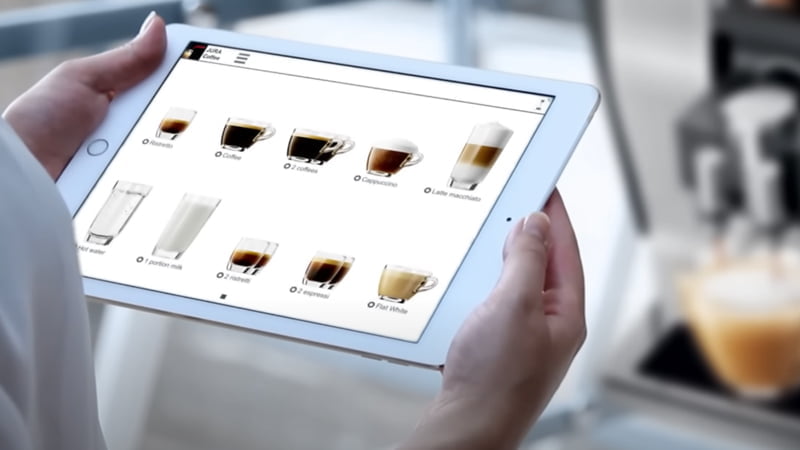
Do you know what’s more thrilling than brewing espresso at the touch of a button? That is you can command the machine to do it while you are anywhere in your house, even in bed. Yes, both the Jura Z8 Vs Z6 can be controlled remotely via the user-friendly J.O.E. app. The app is completely free to download and use, but you will need to purchase a Smart Connect separately,
This app will also allow you to perform necessary adjustments and keeps you informed about when to change the filter or when the machine is running low on water or beans. It’s even compatible with an Apple watch, so you can brew your drink with the touch of your wrist.
Energy Saving
They both have some features to protect the environment and reduce your electricity bill. With their energy-saving mode in operation, they significantly trim down power usage when not actively brewing drinks. They also come with an auto-off feature, allowing you to program the machines to power down after a custom-set period automatically. That way, it helps reduce one thing you must remember before leaving the house every morning.
Quick Rundown Of Jura Z8
- RANGE OF BEVERAGES: 21 Specialty drink options
- SIMPLE TO USE: Intuitive operation using 4.3" Touchscreen or App
- CONVENIENT: One-Touch, Americano function for long coffees
- TECHNOLOGY: Flavorful ristretto and espresso with P.E.P technology
- GRINDER: AromaG3 grinder is 2X faster than previous models
Last update on 2025-06-24 / Affiliate links / Images from Amazon Product Advertising API
Quick Rundown Of Jura Z6
- The pulse extraction process (P.E.P.) allows the whole bouquet of aromas to Blossom. Result: possibly the best Espresso of all time - at the touch of a button
- The innovative nozzle technology prepares fine, compact and very tempting milk foam. The machine switches from milk to milk foam fully automatically
- The Z6 packs incredible performance into compact Dimensions. All the control elements are conveniently accessible on the front
- Maintenance is just as easy as preparing a Coffee: one touch of a button is all that's needed
- Only Original Jura maintenance products Guarantee complete hygiene and protection. Only our protective formulas have been carefully optimized to suit the programmed and materials used in Jura automatic machines.
Last update on 2025-06-24 / Affiliate links / Images from Amazon Product Advertising API
Product Videos
Related Articles to Jura Z8
- Jura Z8 Vs Saeco Xelsis: A Detailed Head-To-Head Comparison
- Jura Giga 6 Vs Z8: Which Model Reigns Supreme?
- Jura S8 vs Z8: An Intense Confrontation Between 2 Expensive High-end Machines
- Jura Z8 vs ENA 8: The Ultimate Champion Of Coffee Machines
- Jura WE8 vs Z8: Compare Mid-end Vs High-end Coffee Machine To Find The Better For Homeowners
- Jura Z8 vs Giga W3: Which One Will Come Out On Top?
Related Articles to Jura Z6
- Jura Z6 vs Saeco Xelsis: Which One Should You Invest Money In?
- Jura We6 Vs Z6: Which Espresso Machine Is Your Best Choice?
- Jura We8 Vs Z6: Competitive Matchup Between Two Flagships
- Jura S8 vs Z6: Is It True That Machine That Cost More Is Better?
- Jura ENA 8 vs Z6: Choosing the Ultimate Brewing Companion
- Jura E8 Vs Z6: Which Superautomatic Espresso Machine Is Best For Both Office And Home Use?
- Breville Oracle vs Jura Z6: Which 3000$ Espresso Machine Is The Best Buy?
- Jura E6 vs Z6: Is It Worth Spending The Extra Money On The Z6?
- Breville Oracle Touch vs Jura Z6 Review: Which Offers Greater Value For Money?
References:
- Jura Z8: https://au.jura.com/en/homeproducts/factory-service-machines/Z8-Alu-INT-15305-S1
- Jura Z6: https://au.jura.com/en/homeproducts/factory-service-machines/Z6-2018-Diamond-Black-INT-15263-S1

I’m Floyd J. Alcock, an experienced barista with a deep love for coffee. I curate personalized coffee experiences, guiding customers through diverse flavor profiles and suggesting ideal brewing methods. My extensive knowledge of espresso machines enables me to recommend the best equipment to match specific needs and budgets. Sharing my expertise and passion with coffee enthusiasts brings immense satisfaction. I look forward to continuing my journey of coffee discovery with every customer I serve, fostering connections over a shared love for this magical beverage.